Walking Through History: Wheeler Students Explore the Legacy of the Civil Rights Movement in Montgomery
April 2, 2026
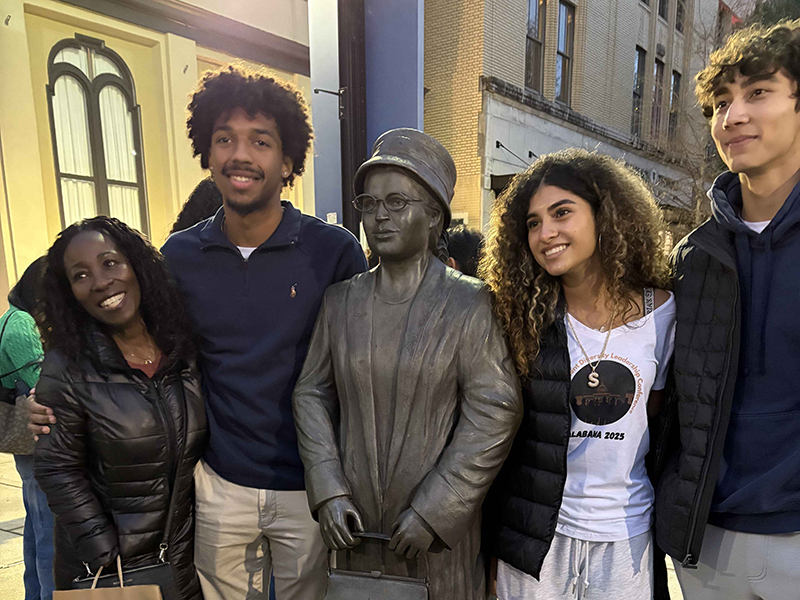
“It is one thing to study and discuss the significance of the Civil Rights Movement in a classroom, but it is entirely different to stand in the very spaces where Martin Luther King Jr., Rosa Parks, John Lewis, and so many other leaders gathered, organized, and courageously advanced the fight for equality,” said Design Shop Director Thanh Luong P’32, P’32, P’34. Mr. Luong was among the faculty members who chaperoned Wheeler’s Student Diversity Leadership Program trip to Montgomery, Alabama, last fall.
Earlier this school year, a group of Wheeler Upper School students and faculty traveled to Montgomery for an immersive learning experience exploring the history of the Civil Rights Movement. A few years ago, when Wheeler wasn’t selected to attend the National Association of Independent Schools’ Student Diversity Leadership Conference, Director of Equity, Community, and Belonging Princess Sirleaf Bomba P’16, P’18 created an in-person alternative, giving students a chance to explore leadership, civic engagement, and connect with inspiring leaders.
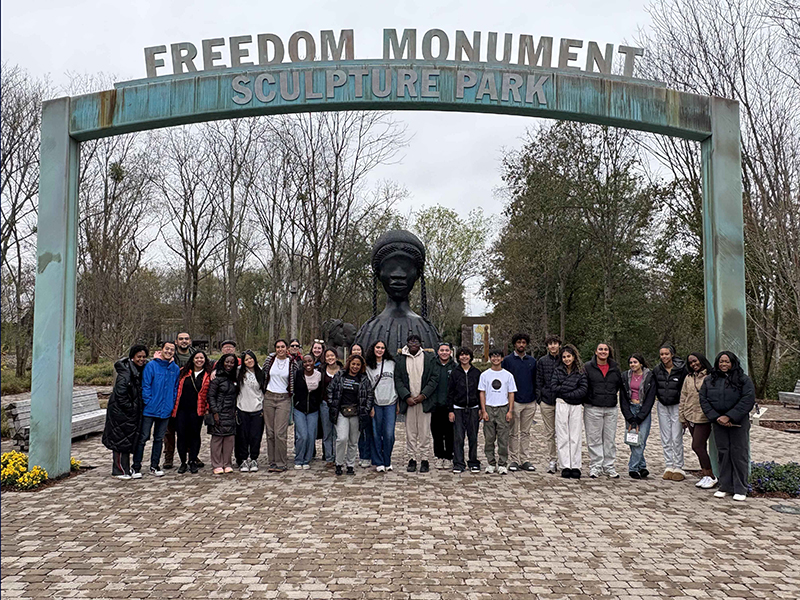
Organized by the Equity, Community and Belonging Office, this year’s Student Diversity Leadership Conference centered the Civil Rights Movement as a model for community care, leadership development, and activism. Sixteen students, along with several faculty members, had the opportunity to tour historic Civil Rights landmarks, including The Legacy Institute, and the National Memorial for Peace and Justice — with structured debrief sessions after each tour, allowing space for reflection, processing, and meaningful conversations.
Through visits to historic landmarks, museums, and community spaces, students engaged with history not as distant events in a textbook, but as lived experiences that continue to shape the present. In talking recently with several members of the group, it became clear there were many powerful moments and lasting impressions from the trip.
Visiting the Legacy Museum was particularly moving for both Javius H. ’27 and Special Educator Horita Graham P’35. “It provided an extremely in-depth explanation of the entire history of slavery in the United States, helping me to truly understand what enslaved people endured,” said Javius. Equally moved, Ms. Graham found that the museum’s approach in tracing the history of racial injustice from slavery to mass incarceration was comprehensive and honest. “A specific moment that stood out to me was walking down a hallway designed like a series of jail cells, where holograms of enslaved individuals suddenly appeared and began sharing their stories. Some of them were children as young as seven years old. This made the experience even more powerful and, at the same time, heartbreaking as I imagined my own child locked behind the bars and telling her story.”
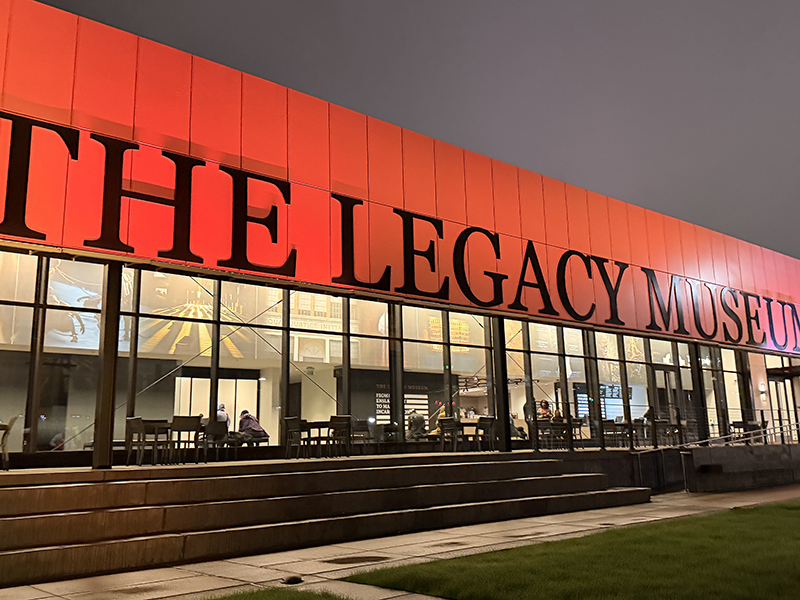
As part of the Legacy Museum tour, the group also visited the National Monument to Freedom, a memorial honoring the four million formerly enslaved Black people who won their freedom after the Civil War. “It is a giant wall that features over 122,000 names recorded in the 1870 census, which was the first to list formerly enslaved Black Americans,” explained Nest Teacher Mohammed Abdalah. “There was also an accompanying app that helped visitors find their surname, giving them a direct connection to their descendants. Seeing students look up their names and call family members to share what they found was a beautiful moment.”
Another stop that left a lasting impression on the group was the Dr. Richard Harris House, originally constructed at the turn of the century and home to Dr. Richard H. Harris Jr. and his family. In May 1961, Dr. Harris opened this home to 33 Freedom Riders challenging interstate bus segregation who were harassed and attacked at the Montgomery Greyhound Bus Station upon arrival. In the days following the attack, Harris’ home served as a haven for the Freedom Riders while martial law was declared in the area. It was at the Harris House that Dr. Martin Luther King Jr., Reverend Ralph D. Abernathy, James Farmer, John Lewis, Diane Nash, and other Civil Rights leaders met to develop a strategy to continue the rides.
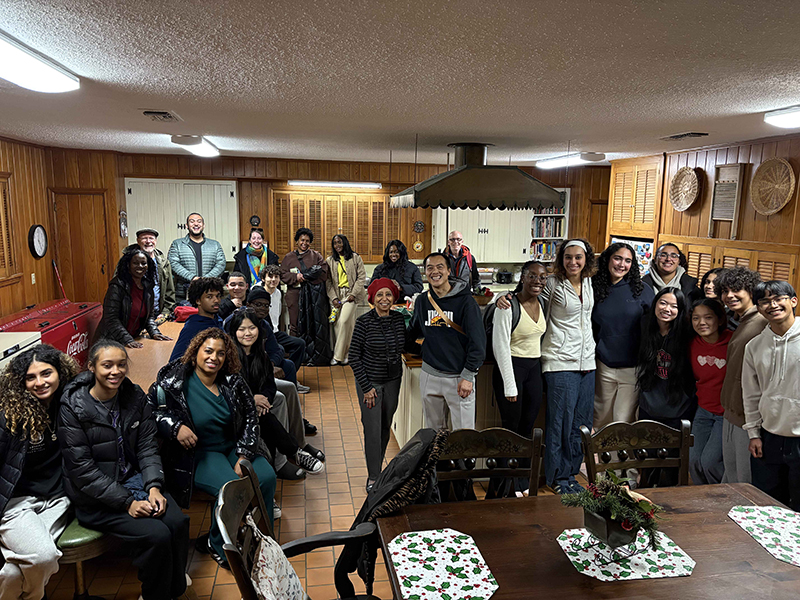
Mr. Abdalah described the house’s touring experience as one of the most unique he’s ever had. “It was a museum located within a house with residents currently living in it. None of the primary documents and photos on display were behind glass, including artifacts from the Montgomery Bus Boycott and many other civil rights events. Between learning about the house’s history and hearing it from our tour guide, Valda Harris Montgomery, who lived through the entire Civil Rights Movement, there was an overwhelming sense of profound sacredness in that space.”
Middle School 6th-Grade Teacher Philip Hall shared the same sentiment: “There was something transporting about it, as if there was a direct connection from us in 2025 to those amazing strategists and leaders in 1961.”
Nest Teacher Courtney Newby P’24 remembered sitting inside Holt Street Baptist Church, a pivotal site in the American Civil Rights Movement, where the first mass meeting of the Montgomery Bus Boycott took place in 1955, and feeling its energy. “Seeing the church in person was incredibly emotional,” she said.
As the group visited each historic site in Montgomery, history began to feel immediate and personal rather than distant and abstract, bringing a wide range of emotions for both students and educators.

“It was definitely a heavy trip, and yet it was extremely moving and certainly made an impact on me,” shared Indira P. ’27.
Javius reflected, “The experience was unforgettable and I hope it can be shared with more people. One significant takeaway for me was the resilience of the enslaved individuals. Despite everything, they remained strong and held onto hope, which inspires me to strive to be the best version of myself every day. Although many of the concepts explored in those museums are covered in history classes, actually visiting these sites truly puts into perspective what they went through and helps you better understand your privilege.”
Nathasha D. ’28 also found the trip inspiring, prompting her to reflect on how she can better her community. “If given the opportunity, I think everyone should take it. It only takes the voices and resilience of one person to start a movement. And we, the new generation, have to fight to make sure our world doesn’t get stuck in the ways of the past of the generations before us.”
The trip culminated in the students’ “Community Care” leadership presentations, where they reflected on what they had learned and how they could translate it into action in their own communities. For the educators who guided students in developing these presentations, it was the students who inspired them most throughout the conference. “The students modeled to us, the adults, just what optimism and courage look like, as well as showing us how knowledgeable and grounded they were,” said Mr. Abdalah. “There were true moments of painful reflection and unadulterated, spontaneous joy. Truly inspiring!”
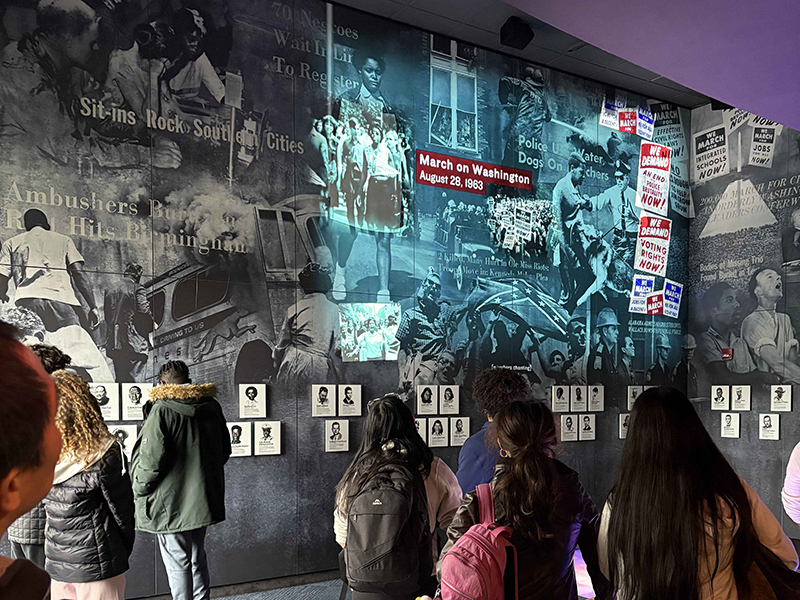
Mr. Luong echoed Mr. Abdalah. “The Upper Schoolers immersed themselves in the experience without hesitation and approached every moment with curiosity, respect, and gratitude. It was clear they understood the rarity and significance of learning within such powerful historical spaces.”
For Mr. Luong, the impact of the experience was equally profound, particularly in how it helped students connect history to their own sense of identity and purpose. “This conference offered our student leaders an experience that cannot be replicated through books or lectures,” said Mr. Luong. “Learning history within its lived context allows students to connect deeply with the past and themselves, strengthening their sense of identity, purpose, and responsibility. At the same time, it created meaningful opportunities for faculty to build stronger connections with students and engage in conversations about what truly matters to them. That kind of connection is invaluable.”
For the students and educators who traveled to Montgomery, the experience offered far more than a history lesson. By walking through the spaces where pivotal moments unfolded and engaging deeply with the stories of those who lived them, students encountered history in a way that was both personal and transformative. The trip served as a powerful reminder that understanding the past is essential to shaping a more just and inclusive future.