The Fullness of Life – and of a Career – in The Chazan Gallery
April 21, 2026
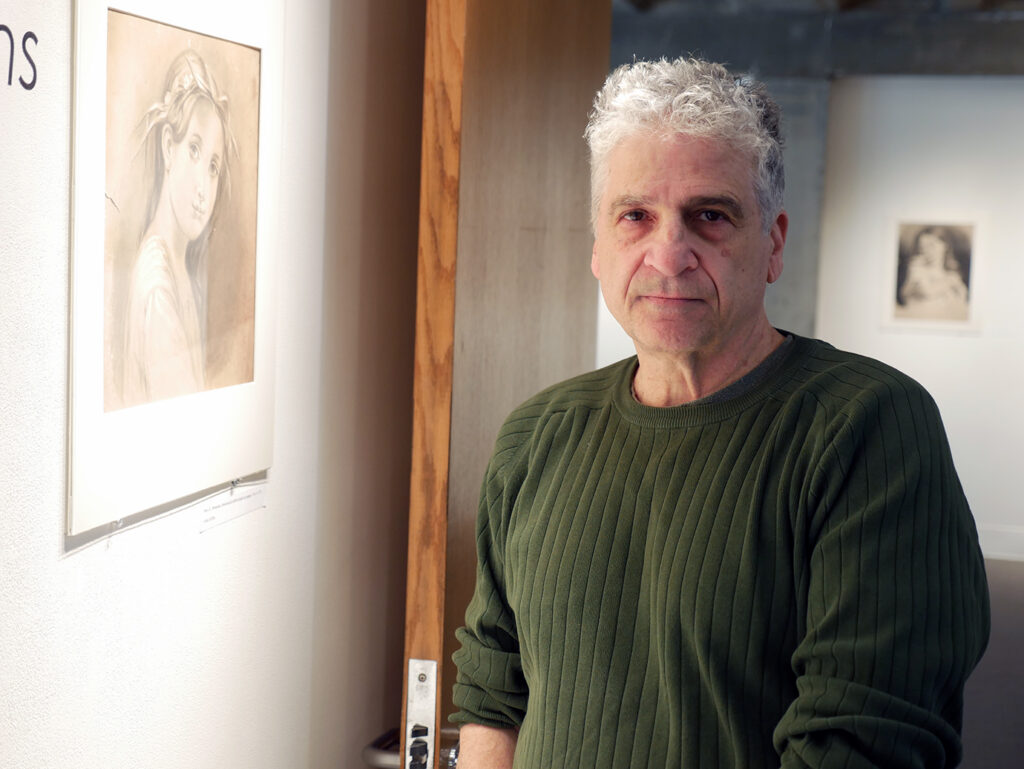
There’s a story behind the title of “Recent Acquisitions,” the Mary C. Wheeler–inspired exhibition currently on display at the Chazan Gallery at Wheeler. Namely, it’s not the exhibition’s official name. While it accurately describes the works on view, which include pieces by Miss Wheeler, as well as by her teachers and students that were most recently acquired by the school, “Recent Acquisitions” appears on the gallery wall only because curator Bob Martin P’05, P’10 had not yet settled on the show’s true title: “The Fullness of Life.”
Drawn from one of Miss Wheeler’s Commencement addresses, this second title is fitting for two reasons: it’s the same name Mr. Martin, who is the school’s archivist and a Visual Arts faculty member, used for his first exhibition about her in 2000, and it reflects the depth of his ongoing commitment to raising awareness of her life and legacy, at Wheeler and beyond.
“I’ve covered the whole span of her life in the previous three shows, and for me, this is kind of summing it up,” Mr. Martin said as we sat together in the gallery. “What she accomplished in her day and age, given the barriers women faced at that time, was just leaps and bounds ahead of the curve. To open a fine art school for girls was a brand new thing. She didn’t wait around for people or for society to change. She just went her own way, in spite of the social forces that were set against her.”
While Miss Wheeler was a pioneer, “The Fullness of Life” makes clear that she was not alone in her journey. The exhibition begins with her own work before expanding outward – to those she learned from, and later, to those she taught.
“The majority of what the Wheeler family gave us in their last donation are drawings,” Mr. Martin said, as he gestured toward a wall of newly displayed pieces. “That was kind of a surprise to me, because in one of their previous donations, they gave us her whole portfolio of drawings from her Paris years. I thought it was complete, but this was a whole separate batch that the family came across and offered to us.
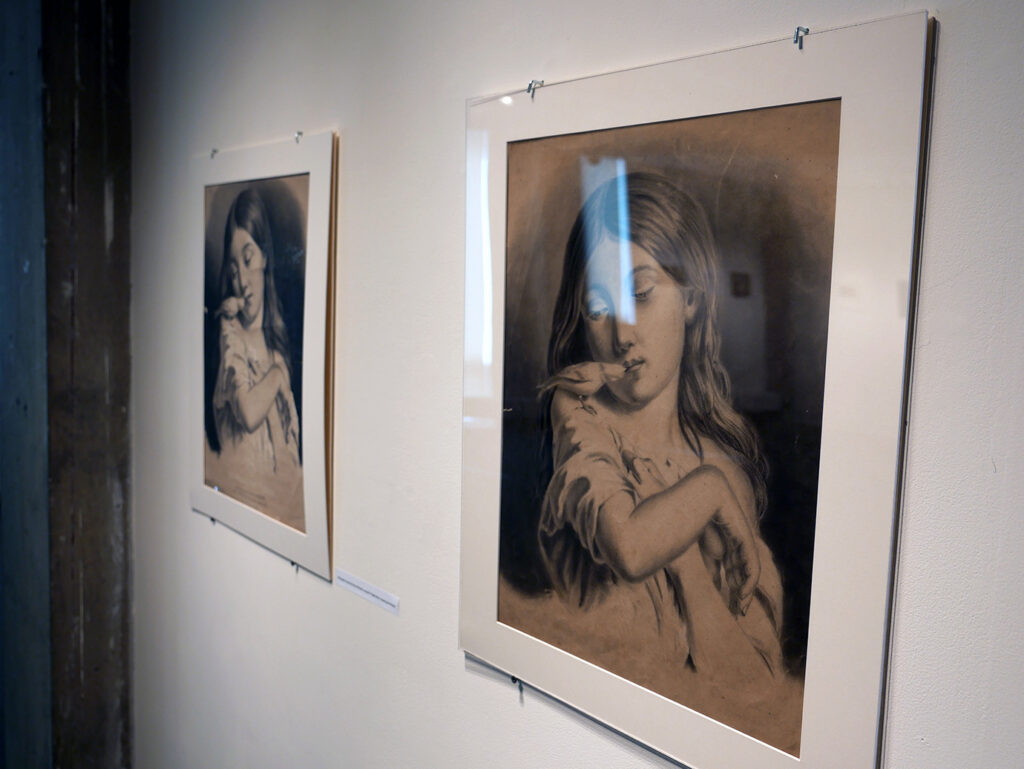
“What’s really lovely about our now expanded collection is that it includes samples from every stage of the art instruction she received while she was in Paris in the 1870s.”
Among those works is a copy of a French lithograph that Miss Wheeler created using the sight-size method, a technique in which artists produce one-to-one scale drawings or paintings by positioning the subject and artwork side by side.
Nearby is the Fawn of Vienna, a plaster cast that peers out from the wall next to Miss Wheeler’s carefully rendered drawing of it. “Plaster casts were often made directly from antique statuary in museums and then circulated among Paris studios for art instruction,” Mr. Martin explained. “The next step would be to make pencil and charcoal drawings from these casts, and you can see here how she’s working through light and shadow.”
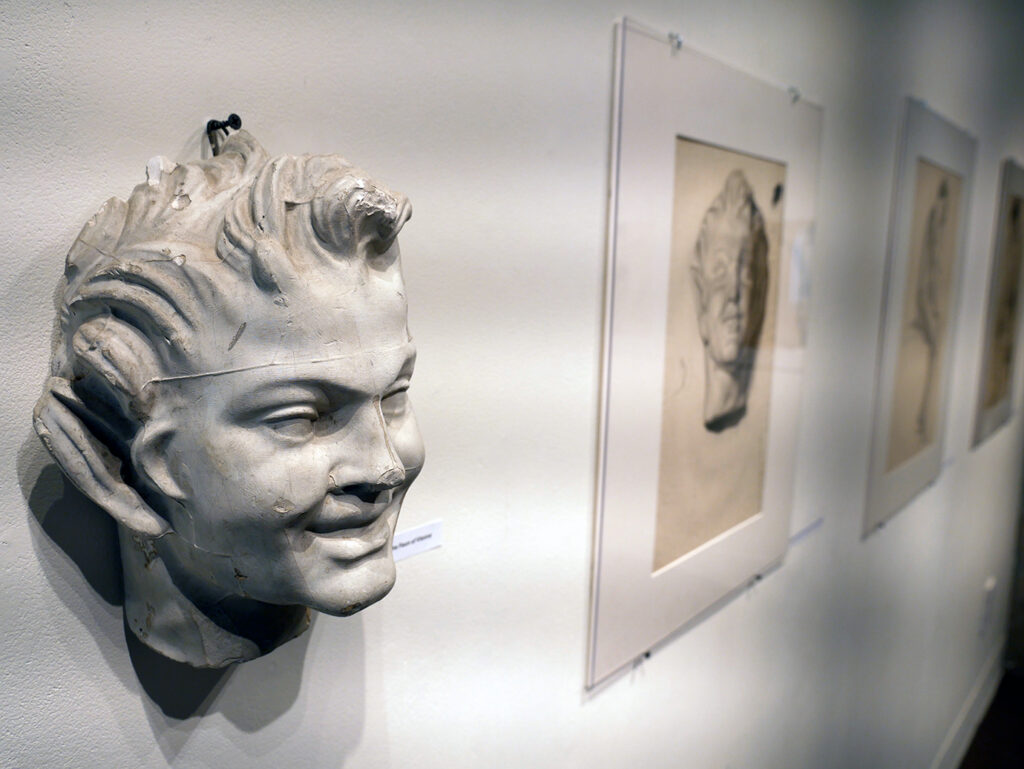
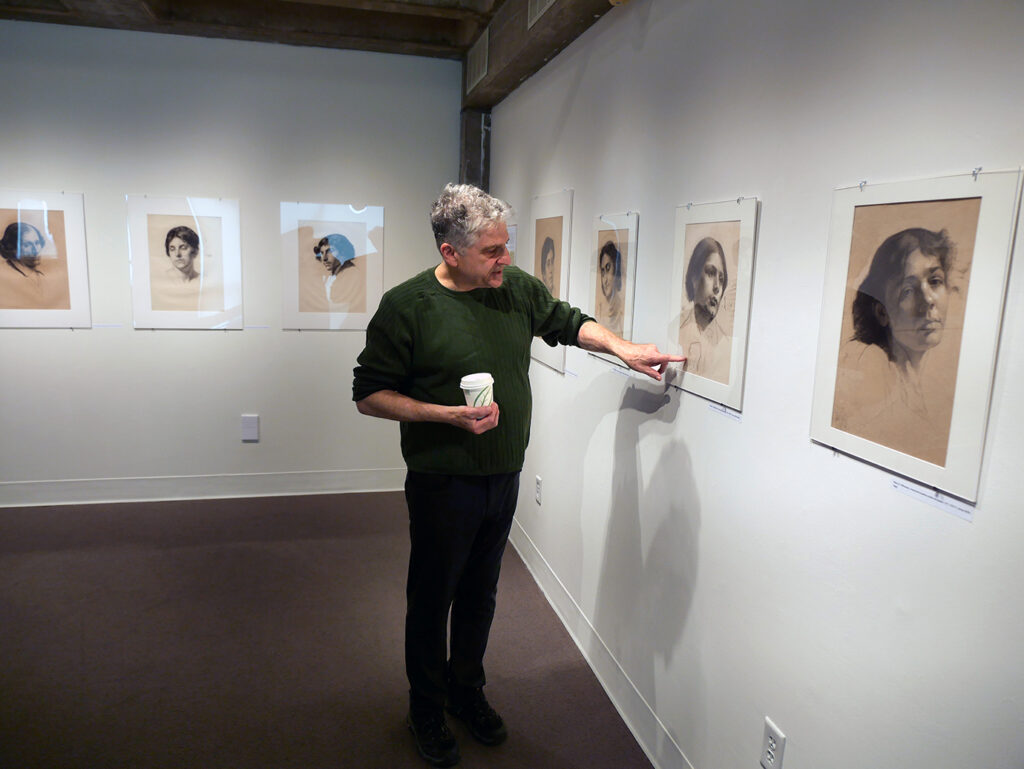
From there, Mr. Martin moved along a series of life drawings that stretch across several walls of the gallery, tracing the progression of her artistic development. Early works, primarily in pencil, show visible crosshatching, suggesting studies that were still in progress. As the series continues, the drawings become more refined, revealing an increasingly sophisticated understanding of anatomy and form.
“These would be much more resolved and finished,” he said, pointing to later works, before moving on to a group of portraits that would have required long hours of careful observation. “We have several drawings of the same model, so you get the idea that her teacher, Jacquesson de la Chevreuse, had a small pool of models that he would hire.”
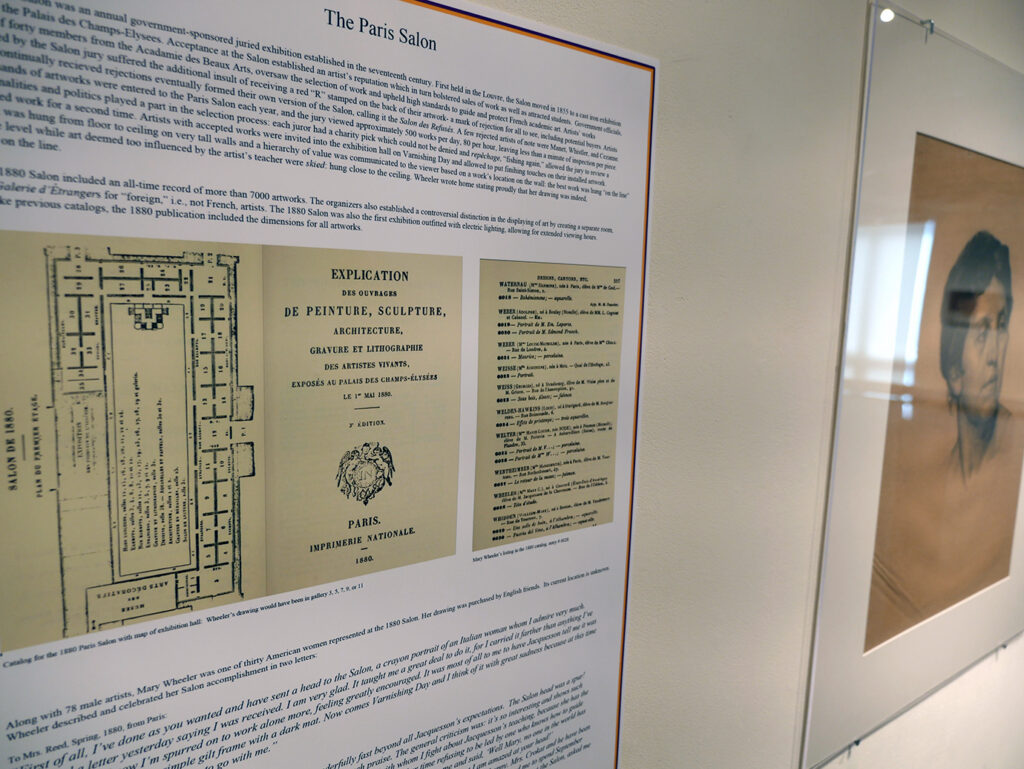
A nearby page from a Paris Salon catalogue offers further context. “The Salon was the yearly competition that would either make or break someone’s career as both an artist and a teacher,” Mr. Martin noted. “Miss Wheeler had a charcoal drawing accepted there in 1880, and you can see her entry on this page. That was the feather in her cap after six years of study in Paris, and at that point, she came home and set up her school here.”
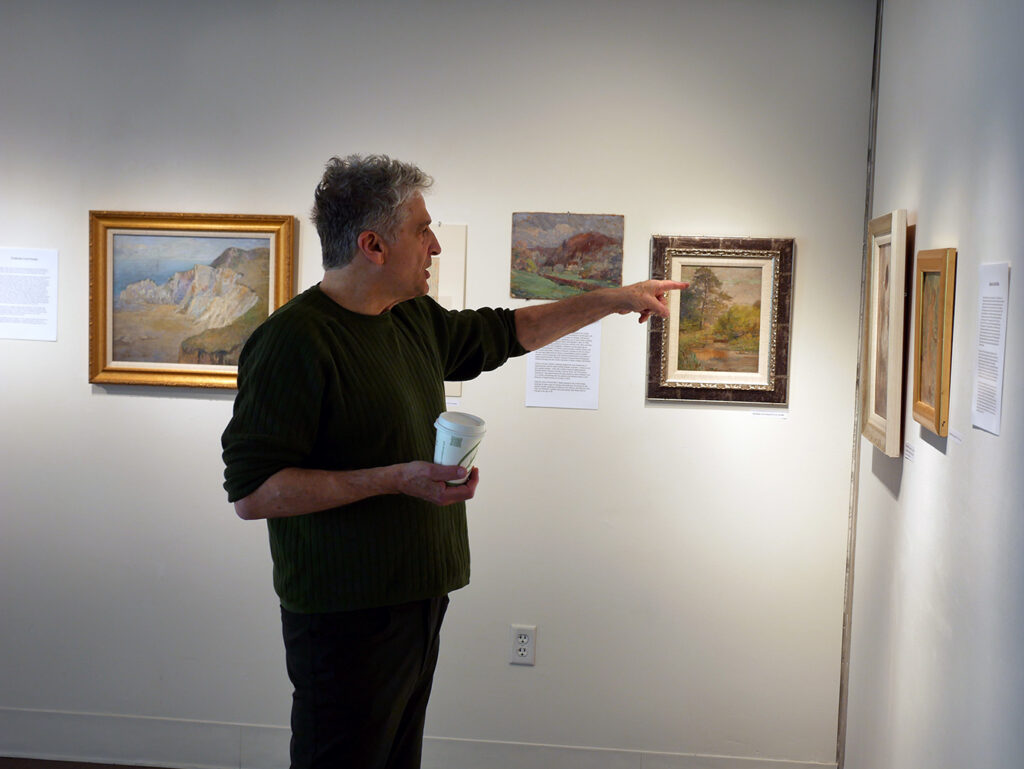
On the other side of the gallery, the focus shifts to artists who were part of Miss Wheeler’s expanding artistic circle. Among them is Raphael Collin, whom she later hired to work with her and her students during a return trip to Paris. “He was representing that generation of French artists who were moving out of the studio and beginning to work directly outdoors in the plein air style,” Mr. Martin said, gesturing toward one of Mr. Collin’s oil paintings.
On a later trip to France, this time to Giverny – where Miss Wheeler spent time alongside her neighbor, the famed Impressionist Claude Monet – she was part of a growing community of artists painting outdoors. Works by members of that now-renowned community, including Guy Orlando Rose, Frederick Carl Frieseke, and Karl Albert Buehr, are featured in the exhibition, along with paintings by Richard Emil Miller, whom Miss Wheeler invited to teach Wheeler students during her later summers abroad.
After walking me through the exhibition, which traces the arc of Mary C. Wheeler’s development as both a student and a professional artist, I asked Mr. Martin why she has been the focus of four of his shows over the course of his three-decade tenure at Wheeler, which will come to a close at the end of this school year.
“I don’t think you should question what fascinates you. You should just follow it and see where it leads,” he replied. “But when I think about the level of effort and energy that was required of Miss Wheeler, as a woman in the 1880s, to start her own school for a population that didn’t have the kind of educational opportunity she wanted to provide, that impressed me from the get-go. I viewed her as an artist who’s really done something, and whose story just needed to be told.”
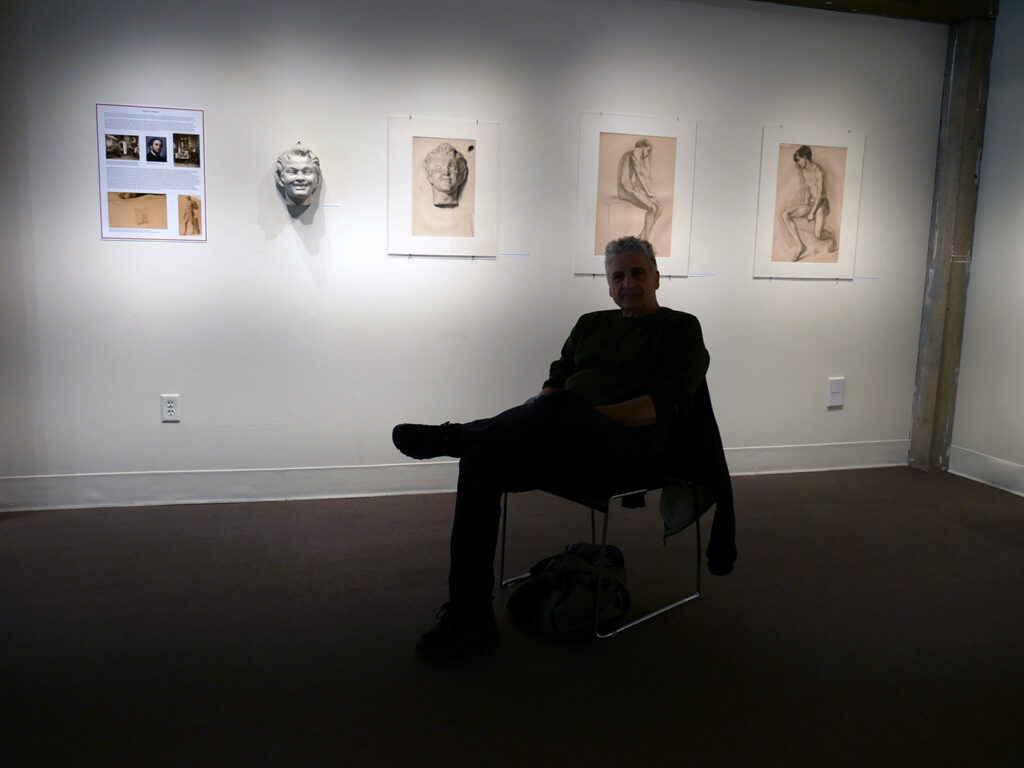
“Recent Acquisitions / The Fullness of Life” will be on display at the Chazan Gallery through April 24. Members of the Wheeler community are invited to a closing reception on Thursday, April 23, from 3:30–5:30pm, when we will celebrate Mr. Martin and Miss Wheeler, together.