Producer Sean Weiner ’01 on Storytelling, Collaboration, and “Union County”
October 1, 2026
This month, we are excited to spotlight Wheeler alumnus and producer Sean Weiner ’01. Sean’s latest film, “Union County,” recently premiered in the U.S. Dramatic Competition at the 2026 Sundance Film Festival and earned strong critical acclaim for its realistic look at the opioid crisis in rural Ohio.
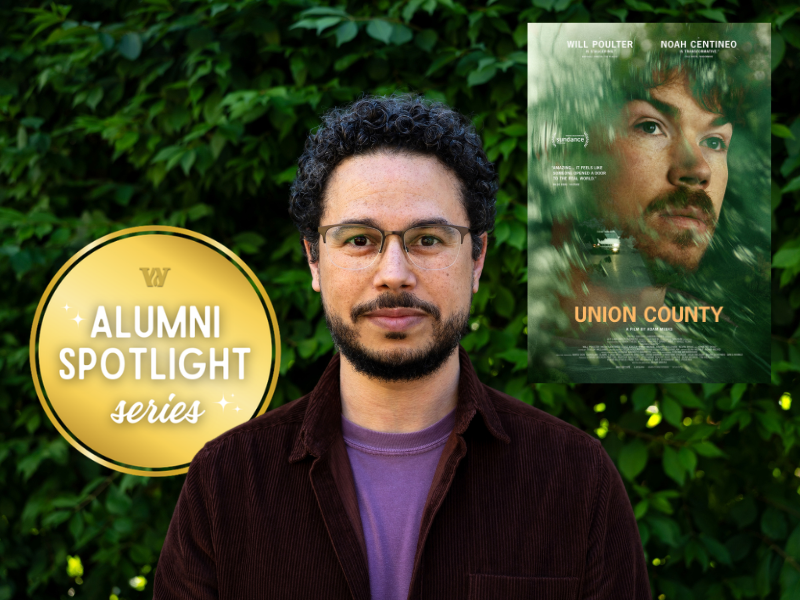
Sean is a co-founder and co-director of UFO (Untitled Filmmaker Org), a nonprofit that supports filmmakers at various stages during their careers when they’re typically under-resourced. He’s also an assistant professor in Film & Media Studies at Purchase College. His own work includes films selected for inclusion at Sundance, Berlinale, and SXSW.
“Union County” tells the story of brothers Cody (Will Poulter) and Jack Parsons (Noah Centineo), who are each navigating a court-mandated drug rehabilitation program in a pocket of rural Ohio hit hard by the opioid epidemic. With the support of a tireless counselor, Annette Deao (a counselor in real life who plays a version of herself in the film), the brothers work toward a brighter, sober future.
“For years, the film industry has used extractive storytelling tactics to enter new communities and tell their stories,” Sean shared. Director Adam Meeks’ approach, Sean said, “defied that. “Instead, his was one of curiosity and deep collaboration. With ‘Union County,’ the goal was to co-create a narrative with a community, not merely about it. That values-driven philosophy resonated with me, and felt especially sensitive when telling a story of addiction and recovery.
“Independent films have the power to platform voices and stories that matter,” Sean continued. “Adam was born in Ohio and returned to the area in the late 2010s when his grandmother got sick. While there, he saw the devastating toll the opioid epidemic was taking on so many in the community. His uncle introduced him to a local drug-recovery court, and Adam began attending meetings and getting to know the folks there. When he asked participants of the program what story the community wanted to see told, the answer was unanimous: a story of recovery. Instead of focusing solely on the struggles and downfalls that often dominate addiction narratives in film, we set a North Star of hope and recovery and partnered with the real people of Bellefontaine to achieve that.”
One of the film’s distinctive features is its blending of scripted performances with real-life experiences. A small cast of actors appears alongside real participants who play versions of themselves on screen.
“The courtroom scenes feature genuine drug-court meetings, with our actors stepping up to the podium amid the life updates shared by actual participants,” Sean explained. “Hybrid storytelling has always captivated me. When executed well, it becomes intensely immersive. I believe our team took the time and care necessary to construct this film thoughtfully, resulting in a story that feels raw and honest as it explores addiction and recovery — a challenge that touches just about everyone or someone they know.”
Long before “Union County,” Sean’s relationship with film began with a love of movies during his years at Wheeler. “I was also fortunate to participate in Sue Carroll’s studio art curriculum, which taught me to approach my inspirations with curiosity and break down their genius into learnable creative decisions and techniques,” Sean added. “Most of my time was spent downstairs in that same brick building, where I performed in every semester’s play — first under Marilyn Levine’s direction and later Lisa Brackett’s, both wonderful mentors. Collaborating with an ensemble of actors, musicians, and stage crew sparked my early ambition to pursue acting. I still remember Jon Vogel taking time out of his day to coach me on audition monologues for collegiate conservatories. Looking back, what I loved most about Wheeler’s Theater program was the collective experience of storytelling, something I have chased ever since.
He went on to pursue a BA in Cinema Studies at SUNY Purchase, beginning his formal study of film from a theoretical perspective. By the end of his studies, he had developed an itch to get experience on movie sets.
“I volunteered on NYU graduate film projects, believing this was the closest I could get to a professional environment. Over the next few years, I began directing my own micro-budget films independently and taking on projects for organizations like the Upright Citizens Brigade.”
It was during his tenure at the Jacob Burns Film Center, an arthouse theater and film education nonprofit, that Sean launched Creative Culture, a program supporting early-career professional filmmakers. The program brought together filmmakers across genres to create short films and connect with audiences through the festival circuit.
“This marked a turning point in my career,” he added. “I realized that my real passion lay in bringing people together to build a shared vision, rather than a personal credit as a filmmaker. Shifting to a supporting role revealed my knack for helping peers develop their craft and advance their careers within a supportive program. Adam, who produced the short film ‘Union County’ in 2019, was one of the program’s fellows.”
In 2023, Sean went on to co-found UFO to continue opening pathways for emerging writer-directors in the often impenetrable film industry.
“Wheeler offered such exceptional arts programs, and in every direction I found faculty members eager to go above and beyond to help me refine my practice and plan my next steps,” he added. “While Wheeler continued to expand my love of the arts, it also modeled for me the selflessness of support. These teachers took students seriously and believed in their potential.”
And now, audiences and critics believe in “Union County,” following seven years of development. “The glowing reviews and audience response we’ve received during this release have meant the world,” Sean shared. “What’s been especially surprising has been how the tone of the comment threads online, a space that is often toxic, has been overwhelmingly positive for our film. The comment sections have offered a safe space for people in recovery to share their stories and for others to encourage them to ‘keep going.’ It’s been beautiful to witness.
“For me personally, this moment marks a new chapter in my support of filmmakers. I’ve spent a decade leading filmmaker development programs, helping storytellers hone their creative voice and vision. Working on ‘Union County’ has shown me a longer arc of that experience. What does it mean to build a creative partnership with a filmmaker over many years? How do you sustain collaboration and grow together? These are exciting questions for me, and I’m looking forward to what lies ahead.”