Coming Together Across Campuses, Centuries, and a Career
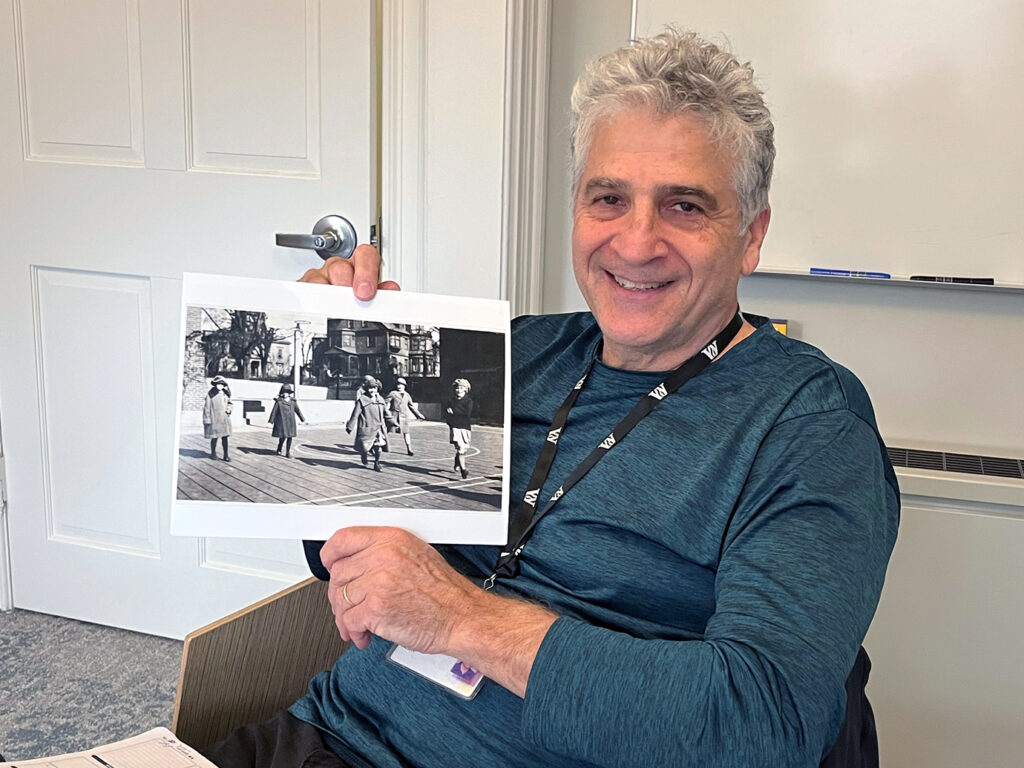
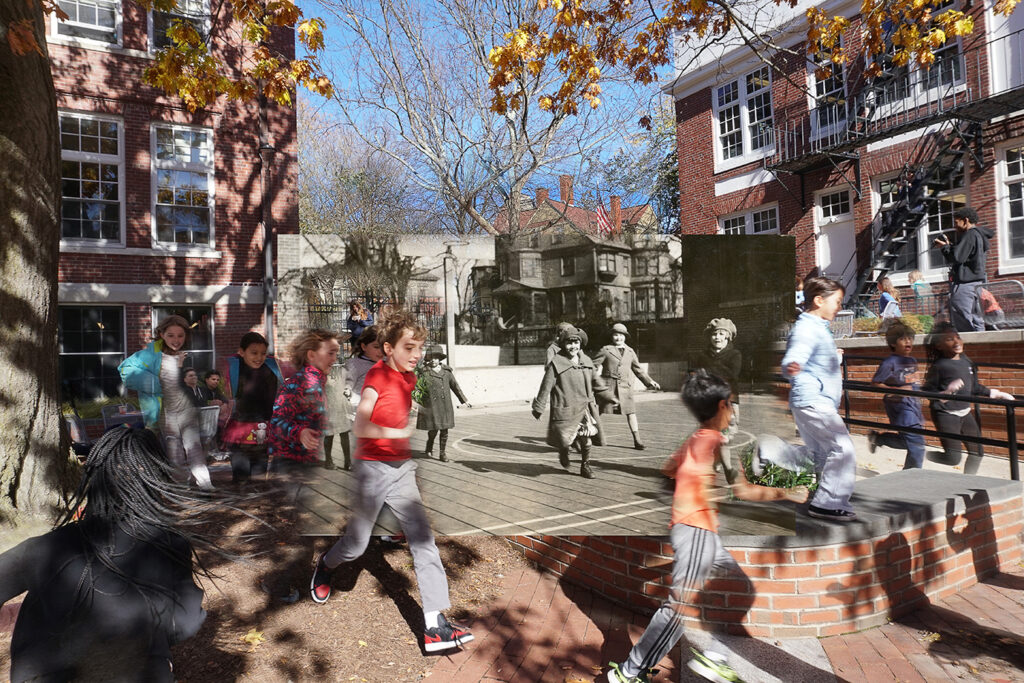
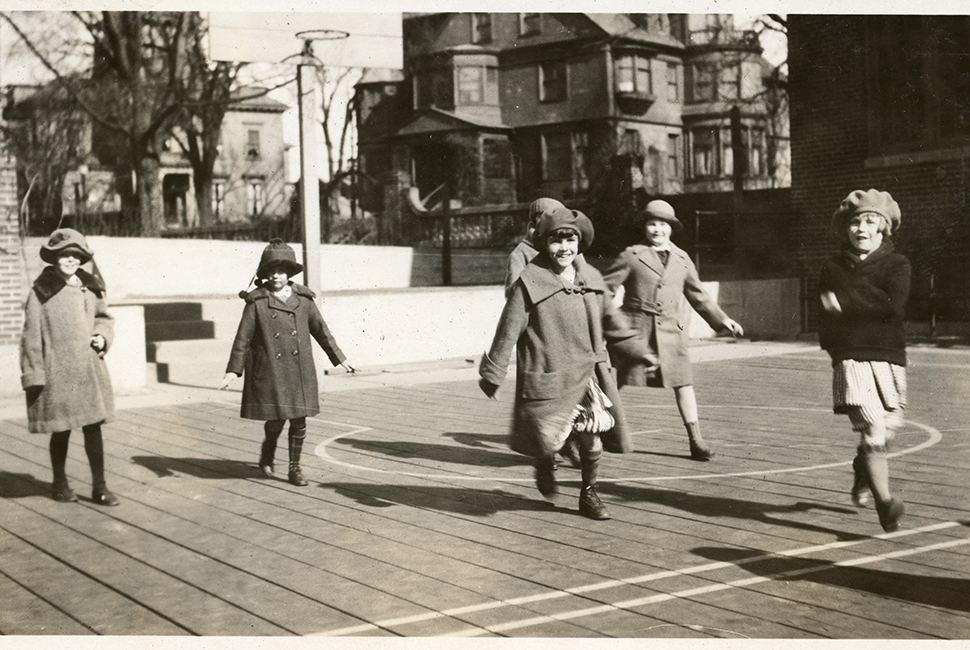
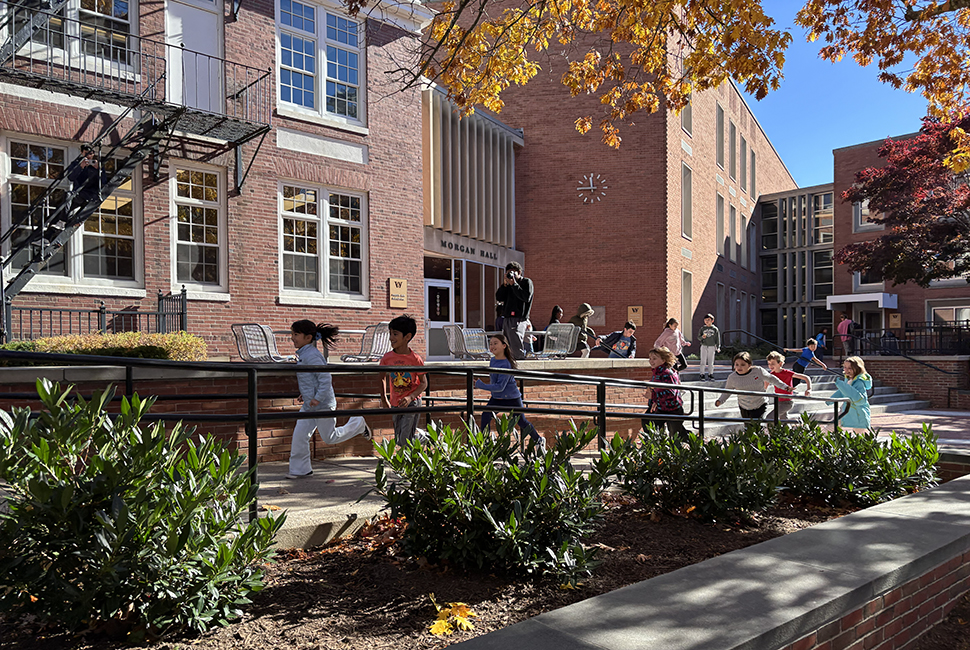
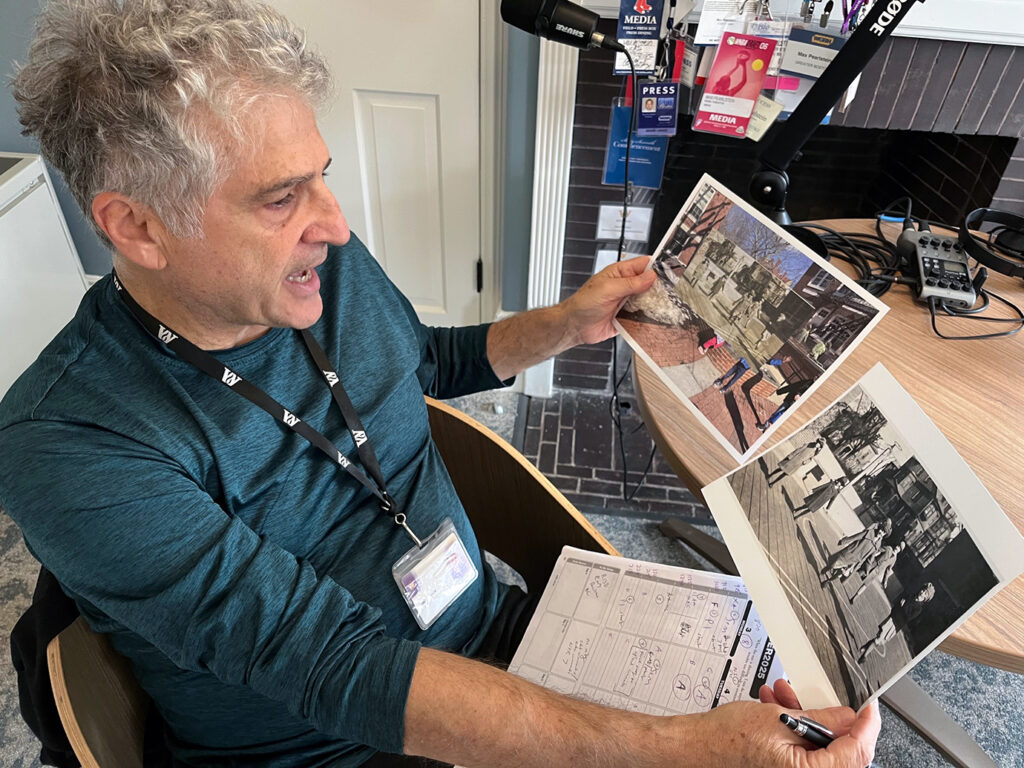
When Bob Martin P’05, P’10 first came across the black-and-white photograph that would inspire this year’s holiday card, he was caught, he says, by a single step suspended in mid-air. The image shows a group of Wheeler students in stride, as they run in the space that’s now between Hope Building and the Fresh Air Building on our Providence campus. Baker House, looking much the same as it does today, appears in the background. Closer to the lens, one girl on the right appears to hover, her feet lifted just off the ground. She’s been frozen in a leap that spanned a century when it finally prompted Mr. Martin to pause while he was sorting through old Wheeler photos.
“It’s that arrested moment,” he explains. “The clarity and detail photography gives us – it makes this past tense image feel real. And yet, when we look at a photograph, we’re always too late to know what came before that moment, and too soon to see what happened after.”
Mr. Martin has often thought about this interplay between the school’s past and present in his role as the school’s archivist, and in his work as a visual arts teacher at Wheeler for the last three decades.
We’ve had the honor and joy to partner with Mr. Martin on many of the school’s annual holiday cards over that time, and as we collaborated with him on this year’s card – his last before retirement – he thought this particular picture could help bridge the years at Wheeler, well beyond his own tenure. He reflects on the process of creating the card in this essay:
In my last year at Wheeler, I offer a meditation on the medium that I have practiced and taught for five decades.
In digitizing the school’s large collection of photographs, I often come across an image that transcends the typical yearbook candid or group portrait. The photograph from the 1930s that serves as the basis for this year’s holiday card is just such an image. We are inundated daily with photographic images. Why are we drawn to one over others? A simple snapshot taken with a handheld Kodak camera of six students at play in the courtyard between Hope and FAB. Even with limited technology, the camera’s shutter speed froze some aspects of the moving students, like the student at far right captured with both feet off the ground, while leaving other areas slightly blurred. The camera’s 2 x 3-inch negative yielded a high degree of detail. Shadows project into the frame from the right: the provisional edge of the photograph always teasing us with what lies just beyond the picture’s border. Defined by its high degree of detail and the autonomous nature of its creation through the instantaneous arrest of light upon a light-sensitive surface, the typical still photograph offers a seductive image. In our embrace of these qualities, we often overlook its limitations. The moment recorded is removed from the flow of time, and as such, tells us very little about its subject.
Authors like Roland Barthes, Stanley Cavell, and Thierry de Duve have written eloquently on this subject. Cavell and Barthes remind us that all photographs are past-tense images: from the first image recorded in 1826 to the image just saved to your smartphone moments ago, every photographic image only ever confirms a world that has already passed. Thierry de Duve points out the psychological bind this creates: While our desire is for the photograph to confirm the presence of the world, as a single instance plucked from the continuous flow of time, the photograph instead leaves us in a manic state as we find ourselves arriving too late to know the origins of the event photographed, and too soon to know its conclusions.
I was introduced to these philosophical speculations on our relation to photography by one of my mentors, William E. Parker, in 1981, and I have been wrestling with these ideas ever since. How can one find meaning and connection through a medium that only offers an unending series of isolated moments?
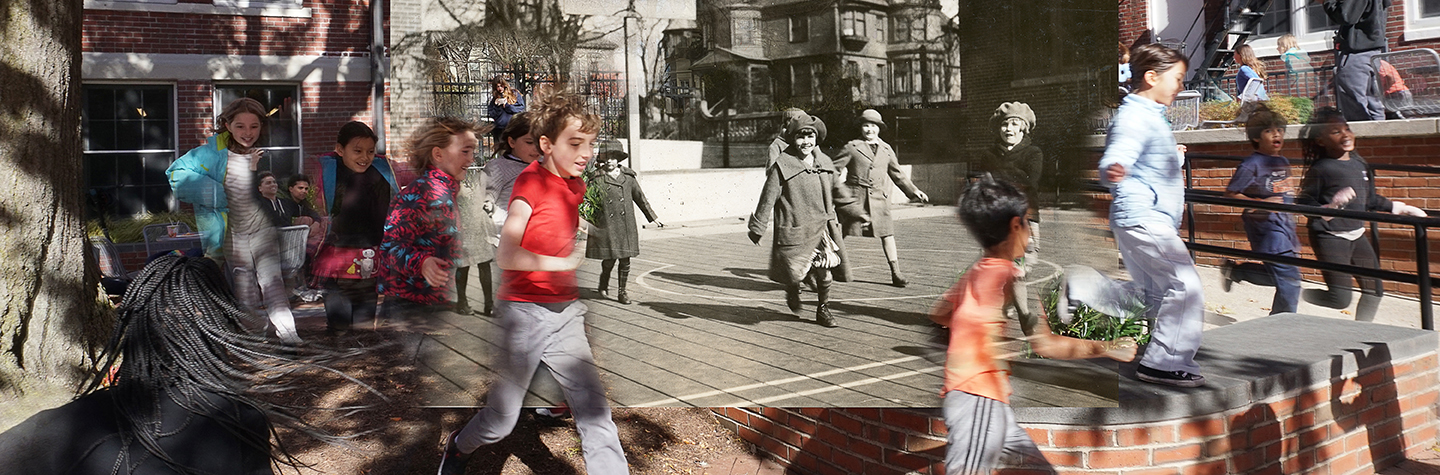
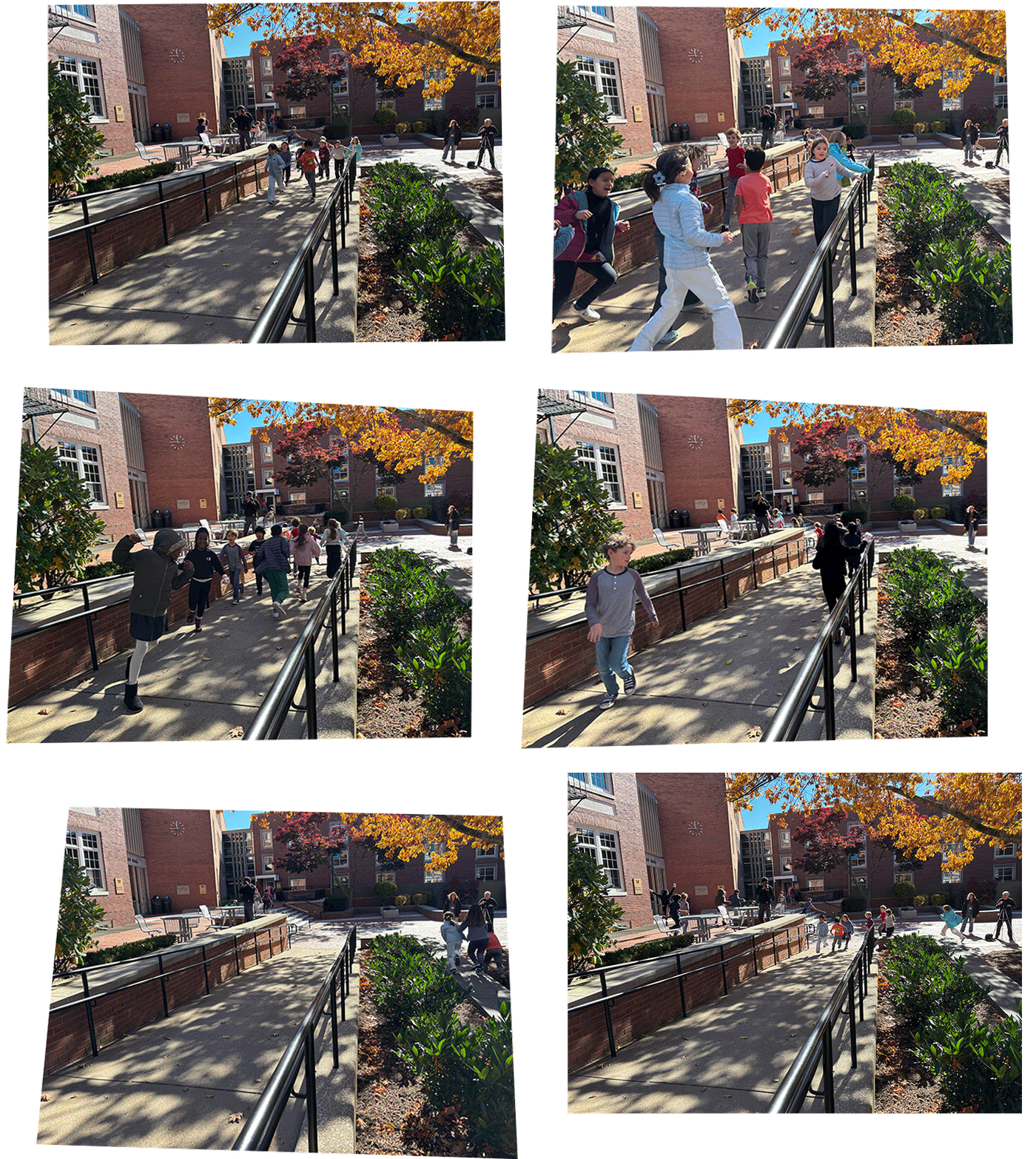
The art of collage provides a remedy to the dilemma posed by the single photograph: An individual image needs to be joined by others in the same way that individuals come together to find meaning as a community. By montaging multiple photographs into one image, connections can be made across time, past and present may converge – even speak to each other. I have applied this technique to several time-based projects, including my family life, the history of Roger Williams Park, and The Wheeler School, where it has been my great pleasure to work in the Archives preserving our school’s history and our founder’s legacy.
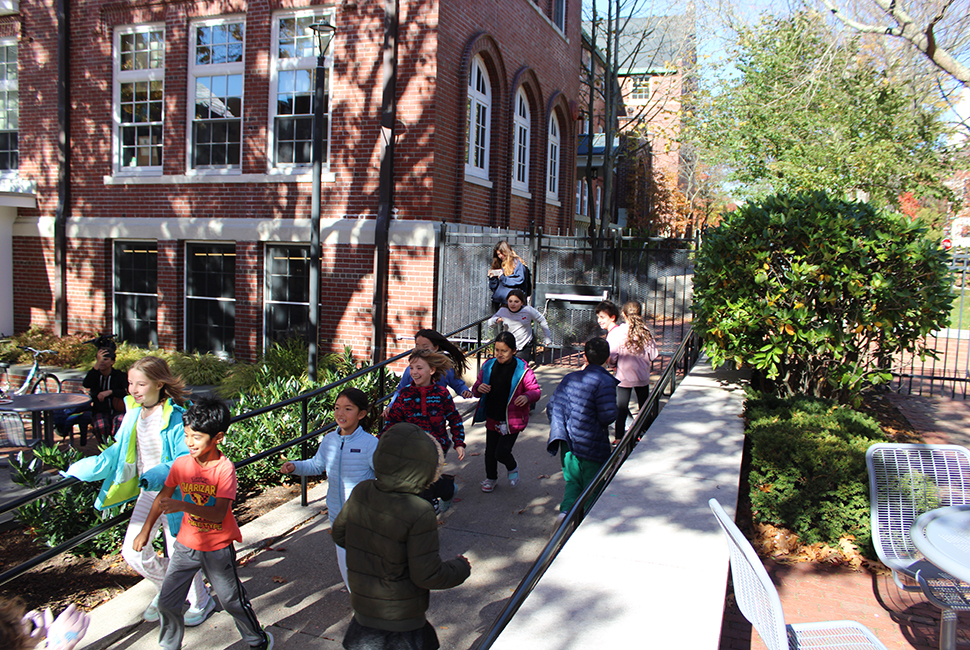
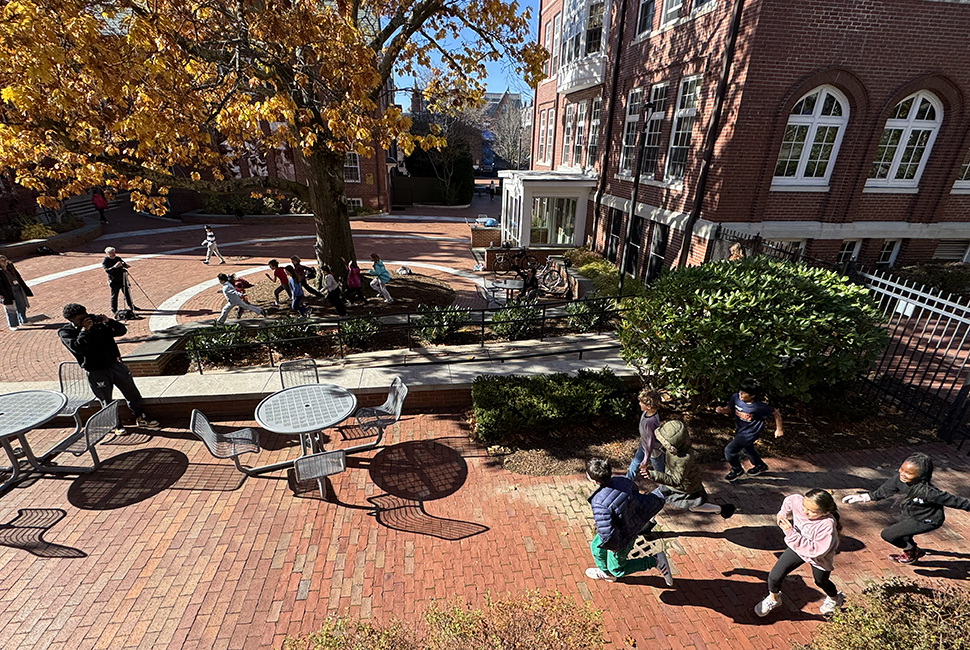
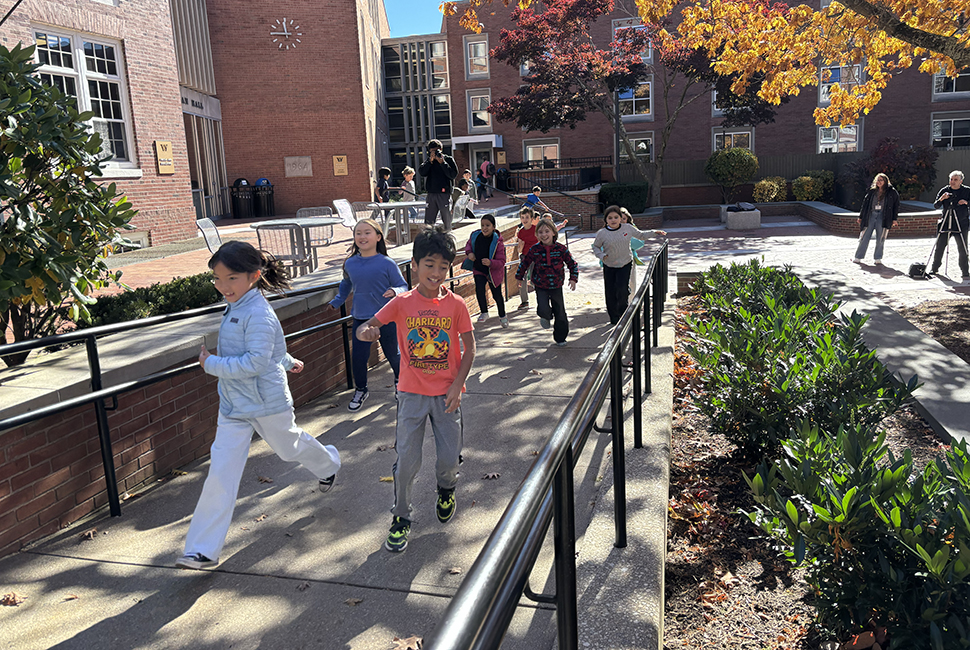
I thank our 3rd-graders for participating in the photography session that led to the creation of the card, especially Teacher Summer Spiller who helped organize it, as well as my four seniors in Advanced Photography class: Hattie C. ’26, Krishn M. ’26, Nico R. ’26, and Calder S. ’26 for adding their unique viewpoints to the project.
I thank The Wheeler School, my colleagues, and students (past and present) for providing that community for the past 36 years.